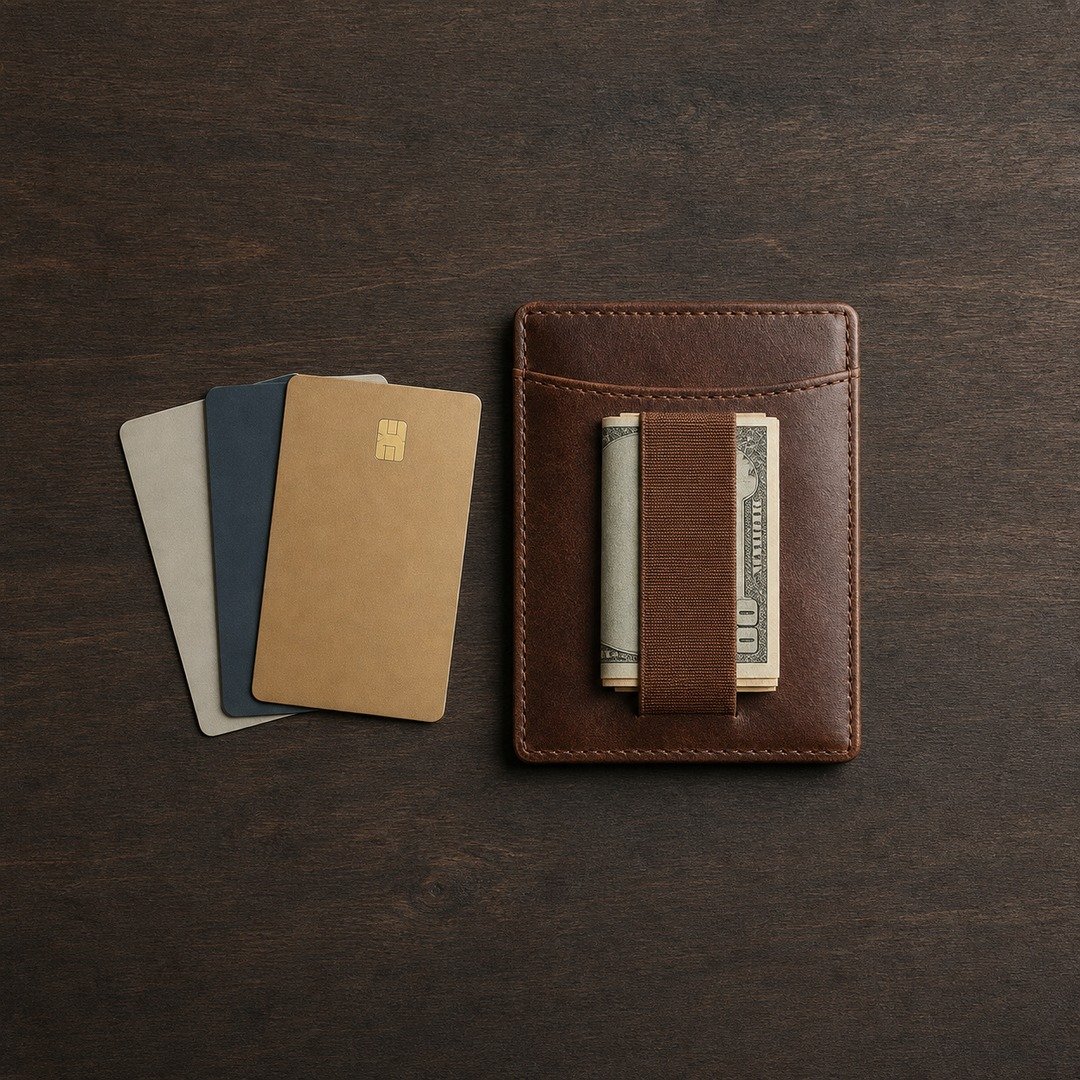
If your back pocket has felt like a brick for the past few years, you're not alone. The shift toward minimalist wallets isn't a passing trend — it's a response to how men actually carry money and cards today. Most transactions happen by tap-to-pay, cash use keeps declining, and a wallet stuffed with receipts, loyalty cards, and coins is simply outdated.
This guide breaks down exactly what makes a wallet "minimalist," which materials and designs hold up in 2026, how to choose based on your lifestyle, and which specific wallet styles are worth your money — without the fluff you'll find in most buying guides.
Table of Contents
- What Is a Minimalist Wallet? (Definition)
- Why Minimalist Wallets Matter in 2026
- Key Factors to Consider Before Buying
- Types of Minimalist Wallets (Comparison Table)
- How to Choose the Right Minimalist Wallet for Your Lifestyle
- Common Mistakes When Buying a Minimalist Wallet
- Expert Tips for Extending Wallet Lifespan
- Minimalist Wallets vs. Traditional Wallets
- Sustainability Considerations
- Frequently Asked Questions
- Key Takeaways
What Is a Minimalist Wallet? (Definition)
A minimalist wallet is a slim, compact wallet designed to hold only essential cards and cash, typically measuring under 1cm thick and weighing less than 60 grams, eliminating bulky features like coin pouches, excess card slots, and thick bifold construction.
Minimalist wallets prioritize:
- Slimness— designed to fit comfortably in a front pocket
- Capacity control— usually 4 to 12 card slots, not 20+
- Material efficiency— thin leather, aluminum, carbon fiber, or woven textiles
- Functionality over storage— cash strap, money clip, or slim cash pocket instead of a folded bill compartment
This is different from a traditional bifold or trifold wallet, which is built around maximum storage rather than pocket comfort.
Why Minimalist Wallets Matter in 2026
The Shift Away from Cash and Bulk
Digital payments, mobile wallets, and tap-to-pay cards have reduced the average number of items men need to carry daily. A 2026 everyday-carry wallet doesn't need to hold receipts, gift cards, insurance cards, and five years of loose photos — most of that lives on a phone now.
Back Pain and Posture Concerns
Chiropractors have long pointed out that sitting on a thick wallet for extended periods can contribute to lower back and hip misalignment, sometimes referred to informally as "wallet sciatica." A slim wallet reduces this risk simply by removing the wedge effect under one side of the body.
RFID Skimming Risk
Contactless card skimming remains a real, if modest, risk in 2026 as more payment cards use NFC and RFID chips. Quality minimalist wallets now build in RFID-blocking liners as a standard feature rather than a premium add-on.
The EDC (Everyday Carry) Culture
Minimalist wallets have become part of a broader "everyday carry" movement — men optimizing what they carry daily for function, durability, and intentionality rather than habit. This mirrors trends in minimalist tech, capsule wardrobes, and slow consumption.
Key Factors to Consider Before Buying
1. Card Capacity
| Capacity | Best For |
|---|---|
| 1–4 slots | Ultra-minimalists carrying only ID + 1–2 cards |
| 5–8 slots | Most men — daily cards, ID, transit card |
| 9–12 slots | Men who carry work badges, multiple cards, loyalty cards |
Tip:Choose a wallet rated for slightly fewer cards than you think you need. Cards compress leather over time, so a wallet "rated" for 8 cards often feels tight with more than 6.
2. Material
- Full-grain leather— most durable, develops a patina, ages well, higher cost
- Top-grain leather— smoother finish, slightly less durable than full-grain
- Vegan leather / recycled materials— budget-friendly, cruelty-free, less longevity
- Aluminum or titanium— extremely durable, rigid card protection, no flex
- Woven nylon / ballistic fabric— lightweight, water-resistant, casual look
- Carbon fiber— premium, ultra-thin, scratch-resistant, higher price point
3. RFID Blocking
Look for wallets that explicitly state RFID-blocking material (usually a thin metallic weave embedded in the lining) rather than "RFID safe" marketing claims without technical backing.
4. Cash Storage Method
- Money clip— fastest access, best for men who carry little cash
- Elastic cash strap— holds folded bills securely without bulk
- Slim center pocket— for men who want a traditional fold without excess leather
5. Access Style
- Pull-tab / fan design— cards fan out for quick selection, popular in cardholder wallets
- Front-pocket bifold— folds in half, cards accessible from the side
- Vertical cardholder— stacks cards, thinnest possible profile
6. Durability and Warranty
Premium minimalist wallet brands typically offer 1–5 year warranties on stitching and material defects. This is a strong signal of build-quality confidence and worth checking before purchase.
Types of Minimalist Wallets (Comparison Table)
| Wallet Type | Thickness | Best For | Pros | Cons |
|---|---|---|---|---|
| Slim Bifold | 6–10mm | Traditionalists wanting a familiar fold | Balanced storage, familiar feel | Slightly thicker than cardholders |
| Cardholder | 3–6mm | Ultra-minimalists | Thinnest option, lightweight | Limited cash storage |
| Money Clip Wallet | 4–8mm | Men who carry cash regularly | Fast cash access, secure hold | Less card protection |
| Aluminum/Metal Wallet | 5–9mm | Durability-focused users | Rigid, crush-proof, RFID-safe | Less flexible, colder material |
| Trifold Mini | 8–12mm | Men transitioning from bulky wallets | More storage than typical minimalist styles | Not as slim as other options |
How to Choose the Right Minimalist Wallet for Your Lifestyle
Question: Which minimalist wallet is best for someone who rarely carries cash?
Direct Answer:A cardholder-style wallet with 4–8 slots and no dedicated cash compartment is ideal, since it eliminates unused bulk entirely.
Explanation:If your spending is almost entirely digital, a cash pocket or money clip adds unnecessary thickness. A vertical cardholder keeps your most-used 3–4 cards accessible while staying under 5mm thick.
Question: What's the best minimalist wallet for frequent travelers?
Direct Answer:A slim bifold with RFID blocking and a dedicated passport-adjacent card slot for currency exchange or transit cards works best for travel.
Explanation:Travelers benefit from slightly more capacity (8–10 slots) to hold boarding passes, hotel key cards, and foreign currency alongside daily-use cards.
Question: What's best for someone who still carries cash regularly?
Direct Answer:A money-clip hybrid wallet, which combines a slim card section with an external or internal clip for folded bills.
Explanation:This avoids the bulk of a folded bill compartment while still giving fast, secure access to cash.
Common Mistakes When Buying a Minimalist Wallet
- Buying based on looks alone— thin leather that isn't full-grain can crack within a year of daily use.
- Ignoring card capacity realities— "10-slot" wallets are often only comfortable with 6–7 cards in daily use.
- Skipping RFID verification— some budget wallets advertise RFID protection without third-party testing.
- Choosing rigid metal wallets without testing card removal— some aluminum designs make single-card removal awkward.
- Not accounting for climate— leather wallets in humid climates need conditioning; metal and synthetic options resist moisture better.
Expert Tips for Extending Wallet Lifespan
- Rotate which pocket you carry your wallet in to prevent uneven wear on stitching.
- Condition leather wallets every 3–6 months with a leather-specific conditioner, not generic oils.
- Remove unused cards seasonally — most men carry 2–3 "dead weight" cards they haven't used in months.
- Avoid machine-washing fabric wallets; spot-clean with a damp cloth instead.
- Store metal wallets away from extreme temperature swings, which can affect the RFID lining's adhesive over time.
Minimalist Wallets vs. Traditional Wallets
| Feature | Minimalist Wallet | Traditional Wallet |
|---|---|---|
| Thickness | 3–10mm | 15–25mm+ |
| Card Capacity | 4–12 | 10–20+ |
| Cash Storage | Clip/strap/slim pocket | Full folded compartment |
| Weight | 20–70g | 80–150g+ |
| RFID Protection | Usually standard | Often absent |
| Pocket Comfort | High | Low to moderate |
| Best For | Digital-first spenders | Cash-heavy, high-storage needs |
Sustainability Considerations
More 2026 wallet brands are shifting toward:
- Recycled and vegetable-tanned leathers— reducing chemical runoff from traditional tanning
- Recycled aluminum and ocean-plastic composites— for hardware and metal-cardholder lines
- Plastic-free packaging— increasingly standard among premium EDC brands
If sustainability matters to your purchase, look for third-party certifications (such as Leather Working Group certification for leather goods) rather than vague "eco-friendly" claims.
Frequently Asked Questions (FAQ)
Q1: What makes a wallet "minimalist"?
A minimalist wallet is defined by reduced thickness (usually under 10mm), limited card capacity (4–12 slots), and the removal of unnecessary storage features like coin pouches and excess compartments.
Q2: Are minimalist wallets durable enough for daily use?
Yes, when made from full-grain leather, aluminum, or high-density woven materials, minimalist wallets are built for daily wear and often outlast bulkier traditional wallets because they experience less structural stress from overstuffing.
Q3: Do minimalist wallets actually block RFID skimming?
Quality minimalist wallets with a verified RFID-blocking liner do block RFID and NFC skimming attempts, though the real-world risk of skimming remains statistically low compared to other fraud methods.
Q4: How many cards should a minimalist wallet hold?
Most men comfortably carry 4–8 cards in a minimalist wallet; anything beyond 10 typically defeats the purpose of a slim design.
Q5: Can I fit cash in a minimalist wallet?
Yes, most minimalist wallets include either an elastic cash strap, a money clip, or a slim center pocket specifically designed for folded bills without adding significant bulk.
Q6: Are metal wallets better than leather ones?
Metal wallets offer superior rigidity and crush protection, while leather wallets offer more flexibility, a broken-in feel over time, and a more traditional look — the better choice depends on personal priorities rather than one being objectively superior.
Q7: What's the price range for a quality minimalist wallet in 2026?
Quality minimalist wallets typically range from $30–$60 for synthetic or budget leather options up to $100–$250+ for full-grain leather or premium metal designs from established EDC brands.
Q8: How do I clean and maintain a minimalist wallet?
Leather wallets should be conditioned every few months with leather-specific products, while metal and fabric wallets can typically be wiped clean with a damp cloth and mild soap.
- Minimalist wallets prioritize slimness, controlled card capacity, and function over traditional bulk storage.
- Full-grain leather, aluminum, titanium, and woven textiles are the leading materials in 2026.
- RFID blocking has become a standard, expected feature rather than a premium extra.
- The right wallet depends on your cash usage, travel habits, and card count — not just aesthetics.
- Avoid overbuying capacity; most men use far fewer card slots than they assume.

Elina is a TrendRouge fashion and lifestyle writer focused on timeless style, beauty routines, accessories, and everyday elegance. Her guides combine practical styling advice with polished editorial insight for modern readers.