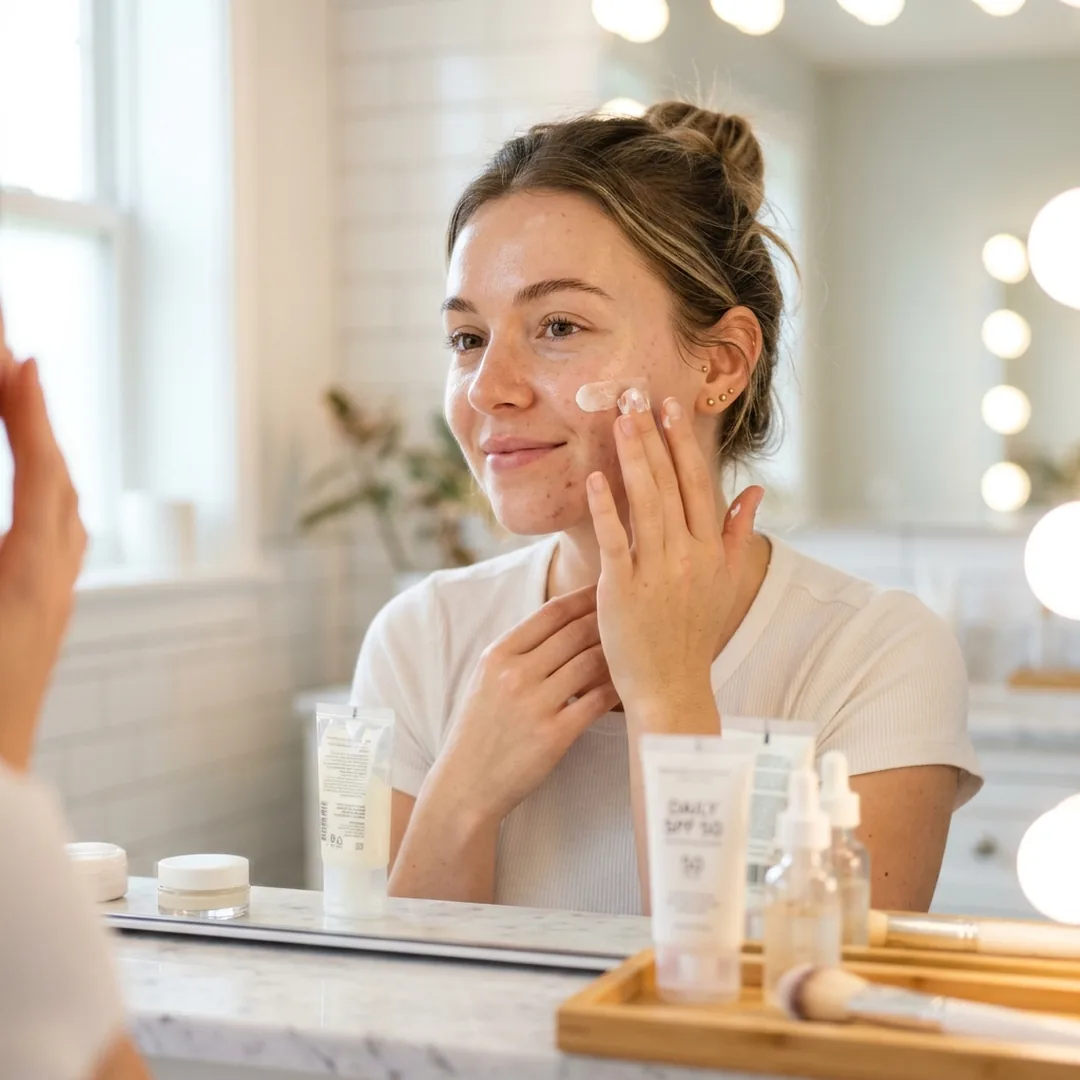
Sunscreen only protects you if it's applied correctly — and most people get the order, amount, or timing wrong when makeup enters the picture. Below is the complete, dermatologist-backed process for making sunscreen and makeup work together instead of against each other.
Table of Contents
- Why This Matters: The SPF-Makeup Problem
- The Correct Skincare-to-Makeup Order
- Step-by-Step: How to Apply Sunscreen Under Makeup
- How Much Sunscreen You Actually Need
- Best Sunscreen Types for Under Makeup
- Chemical vs. Mineral Sunscreen: Which Works Better Under Makeup?
- How to Stop Sunscreen From Pilling Under Makeup
- How to Fix a White or Ashy Cast
- Do You Need to Reapply Sunscreen Over Makeup?
- Best Products to Reapply SPF Without Ruining Makeup
- Common Mistakes to Avoid
- Sunscreen for Different Skin Types and Concerns
- Expert Tips From Dermatologists and Makeup Artists
- Frequently Asked Questions
- Key Takeaways
Why This Matters: The SPF-Makeup Problem
Most people know sunscreen prevents skin cancer, premature aging, and dark spots. What fewer people understand is that applying sunscreen incorrectly under makeup can cut its protection by more than half. A 2019 study on real-world SPF application found that most users apply only 20–50% of the amount used in lab testing to achieve the labeled SPF number — and layering makeup on top often makes the problem worse, not better.
The core issues people run into are:
- Sunscreen pilling (rolling into little balls) when foundation goes on top
- A white or gray cast, especially with mineral formulas
- Uncertainty about how much product to use
- Not knowing whether to reapply sunscreen once makeup is already on
- Choosing the wrong sunscreen texture for their skin type
This guide solves each of these problems in order, so you can build a routine that protects your skin without ruining your makeup look.
The Correct Skincare-to-Makeup Order
Direct Answer: Sunscreen goes after your moisturizer and before any makeup product, including primer.
The correct order for a daytime routine is:
- Cleanser
- Toner or essence (optional)
- Serum (vitamin C, niacinamide, hyaluronic acid, etc.)
- Moisturizer
- Sunscreen (SPF 30+)
- Primer (optional)
- Foundation, concealer, and the rest of makeup
Sunscreen should always be the last skincare step and the first "protective" layer before makeup. Applying it earlier in the routine (before serums or moisturizer) dilutes it and reduces the even film needed for full SPF protection. Applying it after primer or foundation means it isn't making direct contact with skin, which weakens its effectiveness.
Step-by-Step: How to Apply Sunscreen Under Makeup
Step 1: Finish Skincare and Let It Absorb
Wait 60 seconds after moisturizer so your skin isn't still damp. Applying sunscreen onto wet moisturizer causes it to slide around and pill later.
Step 2: Use the Right Amount
Dispense about ¼ teaspoon (1.25 ml), roughly a nickel-sized amount, for the face and neck.
Step 3: Apply in Dots, Then Blend Outward
Place small dots across the forehead, cheeks, nose, and chin, then blend gently using flat fingers or a damp sponge. Avoid rubbing back and forth — this causes friction, which is a major pilling trigger.
Step 4: Wait 2–3 Minutes Before Makeup
This is the single most important step people skip. Sunscreen needs a few minutes to set into a film on the skin. Applying primer or foundation immediately on top is the number one cause of pilling.
Step 5: Apply Primer (Optional but Recommended)
Choose a silicone-free, water-based primer if you're using a chemical sunscreen, since mixing silicone-based primers with certain sunscreen filters is a common pilling culprit.
Step 6: Apply Foundation With a Damp Sponge
A damp makeup sponge (like a beauty blender) presses product into skin rather than dragging it, which keeps the sunscreen layer underneath intact.
How Much Sunscreen You Actually Need
Direct Answer: Use ¼ teaspoon (about 1.25 ml, or two finger lengths of product) for the face and neck to match the SPF tested on the label.
| Application Method | Recommended Amount |
|---|---|
| Teaspoon method | ¼ teaspoon for face + neck |
| Finger method | Two full finger-length lines of product |
| Coin method | Amount equal to two nickel-sized dollops |
Using less than this amount is one of the biggest reasons people think their "SPF 50" isn't working — in practice, they're often only getting SPF 15–20 worth of protection because they applied too thin a layer.
Best Sunscreen Types for Under Makeup
| Sunscreen Type | Texture | Best For | Makeup Compatibility |
|---|---|---|---|
| Chemical (fluid/gel) | Lightweight, fast-absorbing | Oily, combination skin | Excellent — layers smoothly |
| Mineral (zinc oxide/titanium dioxide) | Thicker, can leave cast | Sensitive, acne-prone skin | Good, but needs tinted formulas |
| Hybrid | Balanced | Most skin types | Very good |
| Tinted SPF/BB cream | Medium coverage | Those who want SPF + coverage in one step | Can replace foundation entirely |
Chemical vs. Mineral Sunscreen: Which Works Better Under Makeup?
Direct Answer: Chemical sunscreens generally layer better under makeup because they're thinner and absorb faster, while mineral sunscreens sit more on the surface and can pill or cast if not formulated well.
Chemical sunscreens (avobenzone, octinoxate, octocrylene, homosalate) absorb UV rays and convert them to heat. They tend to be lightweight and cosmetically elegant, making them a popular base layer under makeup.
Mineral sunscreens (zinc oxide, titanium dioxide) sit on top of the skin and physically reflect UV rays. They're gentler for sensitive and acne-prone skin but historically leave a white cast and can feel heavier under foundation. Newer micronized and tinted mineral formulas have largely solved the cast issue.
There's no universal "better" option — the right choice depends on skin sensitivity, tone, and personal texture preference.
How to Stop Sunscreen From Pilling Under Makeup
Direct Answer: Pilling happens when product layers aren't given time to set, when textures clash (usually silicone-based products layered over each other), or when too much product is rubbed into the skin.
Fixes that work:
- Let each layer (moisturizer, sunscreen, primer) sit for 60–90 seconds before adding the next
- Avoid mixing multiple silicone-heavy products in one routine
- Use a damp sponge instead of fingers for foundation application
- Simplify your routine — fewer layers means fewer chances for products to conflict
- Choose a sunscreen labeled "makeup-friendly" or "primer" hybrid
How to Fix a White or Ashy Cast
Direct Answer: Warm the sunscreen between your fingers before applying, use a tinted mineral or chemical sunscreen matched to your skin tone, and blend immediately and thoroughly, especially at the jawline and hairline.
If a cast still appears:
- Layer a small amount of foundation or tinted moisturizer directly on top to neutralize it
- Choose sunscreens formulated with iron oxides, which tint the product to blend into most skin tones
- Avoid old or expired sunscreen, since separated formulas cast more heavily
Do You Need to Reapply Sunscreen Over Makeup?
Direct Answer: Yes. SPF protection breaks down after about two hours of sun exposure, sweating, or touching your face, regardless of whether you're wearing makeup.
You do not need to remove your makeup to reapply. Powder sunscreens, setting sprays with SPF, and cushion compacts are designed specifically to refresh protection over a full face of makeup.
Best Products to Reapply SPF Without Ruining Makeup
| Product Type | How to Use | Best For |
|---|---|---|
| Mineral powder SPF | Dust over foundation with a brush | Oily/combination skin |
| SPF setting spray | Mist 8–10 inches from face | Quick refresh, all skin types |
| SPF cushion compact | Pat gently with sponge | Those who want light coverage refresh |
| SPF stick | Swipe and blend with fingers | On-the-go touch-ups |
Common Mistakes to Avoid
- Skipping sunscreen because foundation has SPF. Most foundations don't contain enough product per application to reach their labeled SPF.
- Applying sunscreen last, over makeup. This traps it on top of oils and pigments instead of on skin, reducing effectiveness.
- Rubbing instead of pressing during blending, which increases pilling.
- Using too little product to "avoid" a white cast or heavy feel.
- Forgetting the neck, ears, and hairline, which are common sites for sun damage.
- Not reapplying because "makeup is already on."
Sunscreen for Different Skin Types and Concerns
| Skin Type/Concern | Recommended Sunscreen Texture | Notes |
|---|---|---|
| Oily/acne-prone | Gel or fluid, oil-free, non-comedogenic | Look for "matte finish" labels |
| Dry skin | Cream or lotion with hydrating ingredients | Look for hyaluronic acid or ceramides |
| Sensitive skin | Mineral, fragrance-free | Zinc oxide is generally best tolerated |
| Deeper skin tones | Tinted chemical or hybrid | Avoids white/gray cast |
| Melasma or hyperpigmentation | Tinted with iron oxides | Iron oxides block visible light, not just UV |
Expert Tips From Dermatologists and Makeup Artists
- Dermatologist tip: Reapplication matters more than the SPF number once you're past SPF 30 — the difference between SPF 30 and 50 is small, but the difference between reapplying and not reapplying is significant.
- Makeup artist tip: Press sunscreen into skin with a damp sponge instead of rubbing with fingers; it creates a smoother base for foundation and reduces pilling.
- Dermatologist tip: Broad-spectrum protection (UVA and UVB) matters as much as the SPF number, since UVA rays penetrate glass and contribute to skin aging.
- Makeup artist tip: If you wear a lot of layers, thin out each one — a little goes a long way, and thick layers of any product are more likely to pill.
Frequently Asked Questions (FAQ)
Q1: Can I mix sunscreen with my foundation instead of applying it separately?
Mixing dilutes the sunscreen and makes it impossible to know your actual SPF coverage, since you're not applying the tested amount. Apply sunscreen as its own step, then foundation separately.
Q2: Does foundation with SPF 30 count as sun protection?
Only if applied generously, which most people don't do with foundation. Use a dedicated facial sunscreen underneath for reliable protection.
Q3: How long should I wait between sunscreen and makeup?
Wait 2–3 minutes so the sunscreen sets into a film before applying primer or foundation.
Q4: Why does my sunscreen pill under makeup but not alone?
Pilling usually happens from layering too many silicone-based products too quickly, or applying makeup before the sunscreen has absorbed.
Q5: What's the best sunscreen for oily, acne-prone skin under makeup?
A lightweight, oil-free, non-comedogenic gel or fluid chemical sunscreen typically layers best and won't clog pores.
Q6: Can I use only powder SPF for reapplication throughout the day?
Powder SPF works for touch-ups but usually doesn't provide a full, even enough layer to replace your morning application entirely.
Q7: Is mineral or chemical sunscreen better for sensitive skin under makeup?
Mineral sunscreen with zinc oxide is generally better tolerated by sensitive and reactive skin, though tinted formulas are recommended to avoid a white cast.
- Apply sunscreen after moisturizer and before makeup, waiting 2–3 minutes before the next step
- Use ¼ teaspoon (about 1.25 ml) of sunscreen for full face coverage
- Chemical sunscreens generally layer more smoothly under makeup; mineral sunscreens are gentler but can cast
- Prevent pilling by letting each layer set and using a damp sponge to apply foundation
- Reapply SPF every two hours using powder, spray, or cushion formulas — no need to remove makeup
- Foundation with SPF alone is not sufficient protection

Elina is a TrendRouge fashion and lifestyle writer focused on timeless style, beauty routines, accessories, and everyday elegance. Her guides combine practical styling advice with polished editorial insight for modern readers.