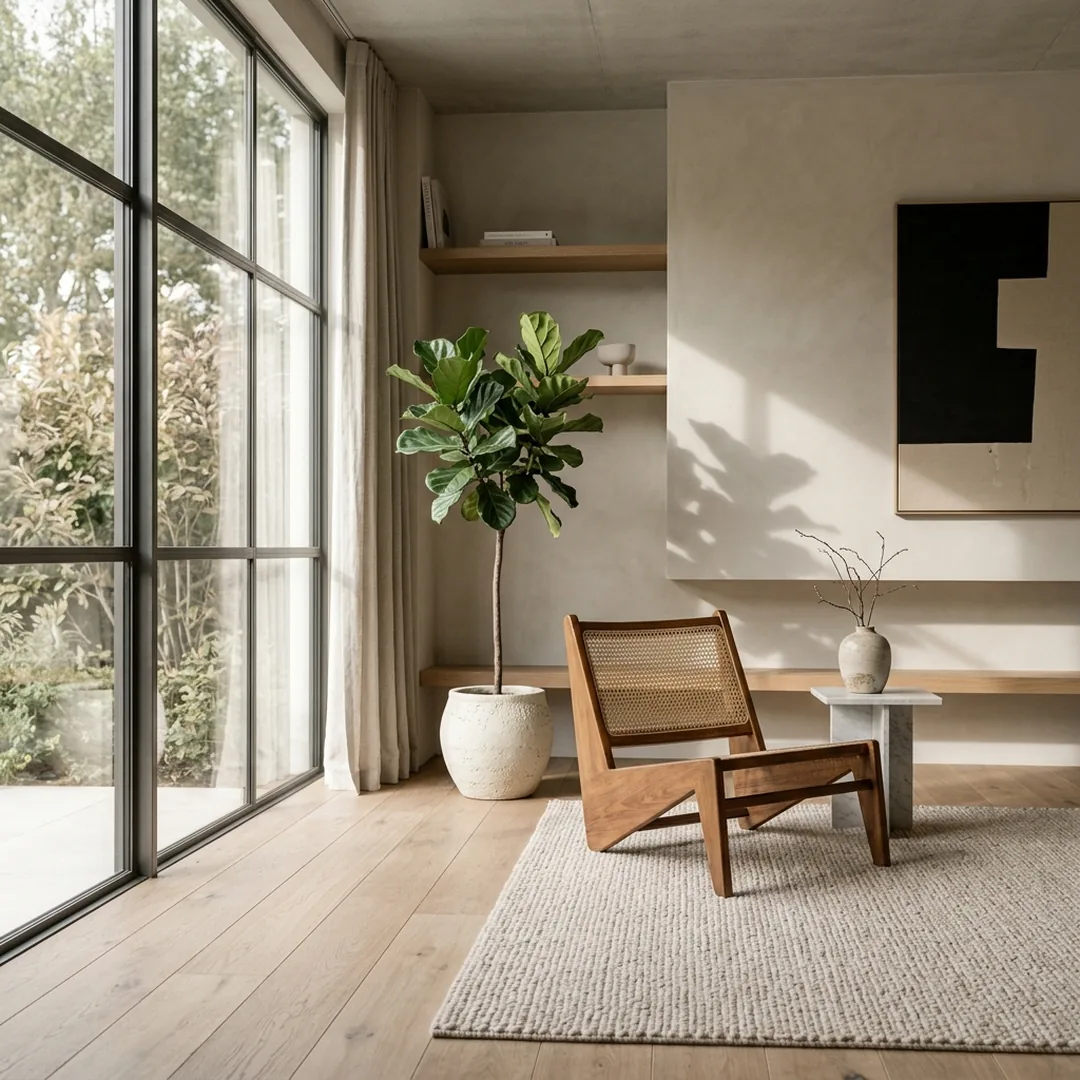
If you've ever felt buried under obligations, overwhelmed by clutter, or exhausted by the relentless push to own more, you're not alone. The minimalist lifestyle offers a refreshing alternative — one built on intention, clarity, and freedom. This minimalist lifestyle guide will walk you through everything you need to know: what minimalism truly means, how to start, and how to sustain it across every area of your life.
Whether you're a complete beginner or someone who's already dabbling in simplicity, this guide has something for you.
Table of Contents
- What Is the Minimalist Lifestyle?
- Why Adopt a Minimalist Lifestyle? The Real Benefits
- How to Start a Minimalist Lifestyle: A Step-by-Step Approach
- Minimalism at Home: Room-by-Room Guide
- Digital Minimalism: Declutter Your Online Life
- Financial Minimalism: Spend Less, Live More
- Minimalist Mindset: The Inner Work
- Common Minimalism Myths — Busted
- Minimalism and Sustainability: A Natural Partnership
- How to Maintain a Minimalist Lifestyle Long-Term
- Key Takeaways
What Is the Minimalist Lifestyle?
Minimalism is not about living in a bare white room with a single chair and no personality. That's a myth — and a stubborn one.
At its core, minimalism is intentional living. It's the deliberate choice to keep only what serves you — in your home, your schedule, your finances, and even your mind. As Joshua Becker of Becoming Minimalist puts it: more joy can be found in owning less than in pursuing more.
The philosophy traces its roots to mid-20th century art and architecture, but today it's a full-blown lifestyle movement. And it's growing fast. A 2026 Deloitte survey found that 78% of consumers say sustainability influences their buying decisions — a mindset deeply aligned with minimalist values.
Minimalism vs. Simplicity: Is There a Difference?
Often used interchangeably, minimalism and simplicity share the same spirit. Both encourage you to remove what doesn't add value and make space for what does. The labels differ, but the practice is essentially the same: remove the excess, keep the essential.
Why Adopt a Minimalist Lifestyle? The Real Benefits
People come to minimalism for different reasons. Some want a calmer home. Others are drowning in debt. Some are chasing more time. What surprises most people is how quickly the benefits stack up — and how far they extend beyond tidier shelves.
Mental Health and Clarity
Clutter is a visual stressor. Research consistently links disorganized environments to elevated cortisol levels (the stress hormone). A minimalist home isn't just prettier — it's mentally lighter. Many people who simplify their spaces report sleeping better, feeling less anxious, and thinking more clearly.
Financial Freedom
Here's one most people don't expect: minimalism is one of the most effective financial tools available. When you stop buying things you don't need, your savings grow almost automatically. Minimalists also tend to downsize their living spaces, cutting housing costs, utility bills, and maintenance expenses. As Dave Ramsey noted in The Minimalists: Less is Now, marketers are remarkably good at creating perceived needs — and minimalism is the antidote.
More Time for What Matters
Every object you own requires some degree of your time — to clean it, maintain it, organize it, insure it, or eventually dispose of it. Own less, and you free up hours every week. That's time you can redirect toward relationships, hobbies, travel, or rest.
Environmental Impact
Fewer purchases mean less waste, less packaging, and a lighter environmental footprint. Climate researchers suggest that widespread minimalist adoption could dramatically reduce global energy consumption by mid-century. Living with less isn't just good for you — it's good for the planet.
How to Start a Minimalist Lifestyle: A Step-by-Step Approach
The most common mistake beginners make is trying to do everything at once. Decluttering your entire house in a weekend sounds heroic — and it usually ends in burnout and regret. A slower, more deliberate approach works far better.
Step 1: Define What Minimalism Means to YOU
Minimalism in 2026 is deeply personal. There's no universal rulebook. Start by asking yourself:
- What are my core priorities in life?
- What does my ideal day look like?
- What's currently getting in the way of that?
Your answers shape your minimalist practice. Someone with young kids will live very differently from a solo remote worker. That's completely fine.
Step 2: Start Small — One Drawer at a Time
Pick a single drawer, shelf, or corner. Sort everything into three piles: keep, donate, discard. Make decisions quickly. If you haven't used something in a year and it holds no sentimental value, it's a strong candidate for the donate pile.
Don't start with sentimental items — that's an advanced move. Start with the easy wins: expired pantry items, duplicate kitchen tools, clothes that don't fit.
Step 3: Apply the "One In, One Out" Rule
Once you've decluttered an area, maintain it with a simple rule: when something new comes in, something old goes out. This prevents the natural accumulation that happens over time and keeps your space in check without requiring another big purge.
Step 4: Tackle Your Wardrobe — Build a Capsule Wardrobe
Clothing is often where the most dramatic minimalist transformation happens. A capsule wardrobe consists of a limited number of versatile, high-quality pieces that all work together. You spend less time deciding what to wear, less money on impulse fashion purchases, and less space storing things you never reach for.
Start by removing anything that doesn't fit, doesn't flatter, or hasn't been worn in the past year. Aim for pieces that are timeless, well-made, and genuinely you.
Step 5: Simplify Your Schedule
Physical clutter is obvious — but what about calendar clutter? Overcommitment is just as draining. Practice saying no to obligations that don't align with your values or goals. Protect your time the same way you protect your space.
Minimalism at Home: Room-by-Room Guide
The Living Room
The living room is often the heart of a minimalist home. Focus on clean surfaces, multi-functional furniture, and intentional decor. In 2026, the trending approach is "minimalist maximalism" — keeping clean lines and open spaces, but adding one or two bold, sculptural statement pieces. Think one large art print, a striking chair, or a geometric light fixture. Fewer things, but things that genuinely reflect your personality.
Quick tips:
- Remove all items from surfaces and only return what is both beautiful and functional
- Choose storage furniture with clean lines (ottomans with storage, simple bookshelves)
- Keep technology tidy — cable management is a minimalist essential
The Kitchen
The kitchen is a clutter magnet. Gadgets, duplicate utensils, expired spices — they all accumulate. A minimalist kitchen focuses on quality tools that serve multiple purposes. A good chef's knife, a cast iron skillet, and a quality blender can handle most cooking tasks.
Minimalists also look for multi-use items. Mason jars work as food storage, drinking glasses, and vases — one item, multiple functions.
Quick tips:
- Audit your gadgets. If it does only one thing and you rarely use it, let it go
- Keep countertops clear except for daily-use items
- Digitize recipes instead of keeping stacks of cookbooks
The Bedroom
Your bedroom should be a sanctuary for rest, not a storage room with a bed in it. Minimalist bedrooms prioritize calm, comfort, and sleep quality.
Quick tips:
- Remove all electronics possible — especially TV and phone chargers
- Keep nightstand clutter-free (one lamp, one book, one glass of water)
- Choose bedding in neutral, calming tones
The Home Office
With remote work now a staple of modern life, a clear home office environment is essential for productivity and mental focus.
Quick tips:
- Use digital tools (Notion, Evernote) to replace paper stacks
- Keep only what you actively use on your desk
- Cable management matters more than you think
Digital Minimalism: Declutter Your Online Life
Minimalism doesn't stop at physical objects. Digital clutter is just as real — and often more insidious because it's invisible. In 2026, digital minimalism is one of the fastest-growing aspects of the lifestyle.
What Digital Minimalism Looks Like
- Reduce screen time — be intentional about when and why you pick up your phone
- Simplify app usage — delete apps you haven't opened in a month
- Clean up your inbox — unsubscribe from newsletters that no longer serve you
- Organize cloud storage — a cluttered Google Drive creates the same mental friction as a cluttered desk
- Curate your social feeds — unfollow accounts that leave you feeling worse, not better
Digital minimalism isn't about becoming a Luddite. It's about ensuring technology serves you, not the other way around.
Financial Minimalism: Spend Less, Live More
Minimalism and financial freedom are deeply connected. Once you stop shopping to fill emotional voids or to keep up with social expectations, something remarkable happens: your savings grow, your stress drops, and your sense of abundance actually increases.
Practical Financial Minimalism Tips
- Track spending with a budget app — awareness is the foundation
- Create a "not buying" list — identify categories where you overspend and commit to avoiding them
- Question every purchase — "Will I still value this in 30 days?"
- Cancel unused subscriptions — streaming services, apps, boxes, memberships
- Audit your "just in case" items — things kept for hypothetical emergencies often just take up space
The goal isn't deprivation. It's alignment. When you spend on what genuinely matters to you, you get far more satisfaction per dollar.
Minimalist Mindset: The Inner Work
Here's the truth: minimalism is as much a mental practice as a physical one. You can declutter your entire home and still feel overwhelmed if your inner world is cluttered with worry, comparison, and distraction.
Habits That Support a Minimalist Mindset
Practice gratitude daily. Focusing on what you already have reduces the pull toward wanting more. Even a brief daily practice — three things you're grateful for — shifts the frame significantly.
Stop comparing. Social media is engineered to make you feel like you have less than everyone else. Curate your feed ruthlessly and check in with yourself: does this content inspire me or make me feel inadequate?
Embrace "good enough." Perfectionism is a form of clutter. It keeps you stuck, overcomplicating decisions that don't need to be complicated.
Be present. Minimalism frees up time and mental bandwidth. The whole point is to use that space — for connection, creativity, rest, and joy. Don't let it get filled back up with busyness.
Common Minimalism Myths — Busted
Myth #1: Minimalism means getting rid of everything you love. Not true. Minimalism means keeping what you love, and letting go of what you don't. Sentimental items that bring genuine joy absolutely belong in a minimalist home.
Myth #2: Minimalism is only for wealthy people. Actually, minimalism tends to build wealth by reducing unnecessary spending. It's one of the most accessible lifestyle changes available.
Myth #3: Minimalists live boring lives. The opposite is usually true. With fewer obligations, less debt, and more time, minimalists often report richer experiences, stronger relationships, and greater life satisfaction.
Myth #4: You have to do it all at once. Minimalism is a journey, not a destination. Small, consistent steps compound over time into a dramatically simpler life.
Minimalism and Sustainability: A Natural Partnership
Living with less and caring for the planet go hand in hand. When you stop buying fast fashion, prioritize secondhand shopping, choose durable products over disposable ones, and reduce overall consumption, you're making a meaningful environmental statement.
Sustainable minimalists declutter with purpose — donating, recycling, or rehoming items rather than sending them straight to landfill. They support brands with transparent supply chains and ethical production practices. They ask not just "do I need this?" but "what is the true cost of this?"
This intersection of minimalism and sustainability is one of the defining trends shaping how people live in 2026 and beyond.
How to Maintain a Minimalist Lifestyle Long-Term
Starting is one thing. Maintaining it is another.
The biggest threat to a minimalist lifestyle isn't a single shopping spree — it's the gradual, unconscious accumulation that happens over months and years. Here's how to stay on track:
- Schedule regular declutter sessions — quarterly is a good rhythm for most people
- Practice the one-in, one-out rule consistently
- Be intentional before every purchase — impulse buying is the enemy of minimalism
- Revisit your "why" — reconnect with the reasons you chose this lifestyle when motivation slips
- Build a community — join minimalist forums, follow inspiring content, or find a like-minded friend to hold you accountable
Minimalism isn't a one-time event. It's a direction, a set of values you return to again and again.
The minimalist lifestyle isn't about achieving some perfect, pristine version of yourself or your home. It's about making space — physical, financial, mental, and emotional — for what truly matters to you.
You don't need to throw away half your possessions this weekend. Start with one drawer. Say no to one unnecessary commitment. Delete one app you haven't used in months. Small acts of intentional simplification, compounded over time, lead to a life that feels genuinely lighter, freer, and more your own.
Less really is more. And it's waiting for you to find out.
Frequently Asked Questions (FAQ)
Q1: What is the minimalist lifestyle, exactly?
The minimalist lifestyle is the intentional practice of living with only what adds value to your life — removing excess possessions, commitments, and distractions so you can focus on what matters most. It's not about deprivation; it's about clarity and intentionality.
Q2: How do I start a minimalist lifestyle as a complete beginner?
Start small. Choose one area — a single drawer, a closet shelf, or your phone's app library — and declutter it. Sort items into keep, donate, and discard. Once you experience how good it feels, you'll be motivated to continue. Avoid trying to overhaul your entire life in one weekend.
Q3: Can minimalism help with anxiety and mental health?
Yes. Research links cluttered environments to increased stress and anxiety. A cleaner, more intentional space tends to produce a calmer, clearer mind. Many people who adopt a minimalist lifestyle report reduced stress, better sleep, and improved focus within weeks of starting.
Q4: Does minimalism mean you can't have nice things or enjoy shopping?
Not at all. Minimalism is about intentionality, not punishment. You can absolutely own nice things — in fact, minimalists often spend more per item because they buy fewer, higher-quality things that truly serve them. Shopping is fine when it's deliberate rather than habitual or compulsive.

Elina is a TrendRouge fashion and lifestyle writer focused on timeless style, beauty routines, accessories, and everyday elegance. Her guides combine practical styling advice with polished editorial insight for modern readers.