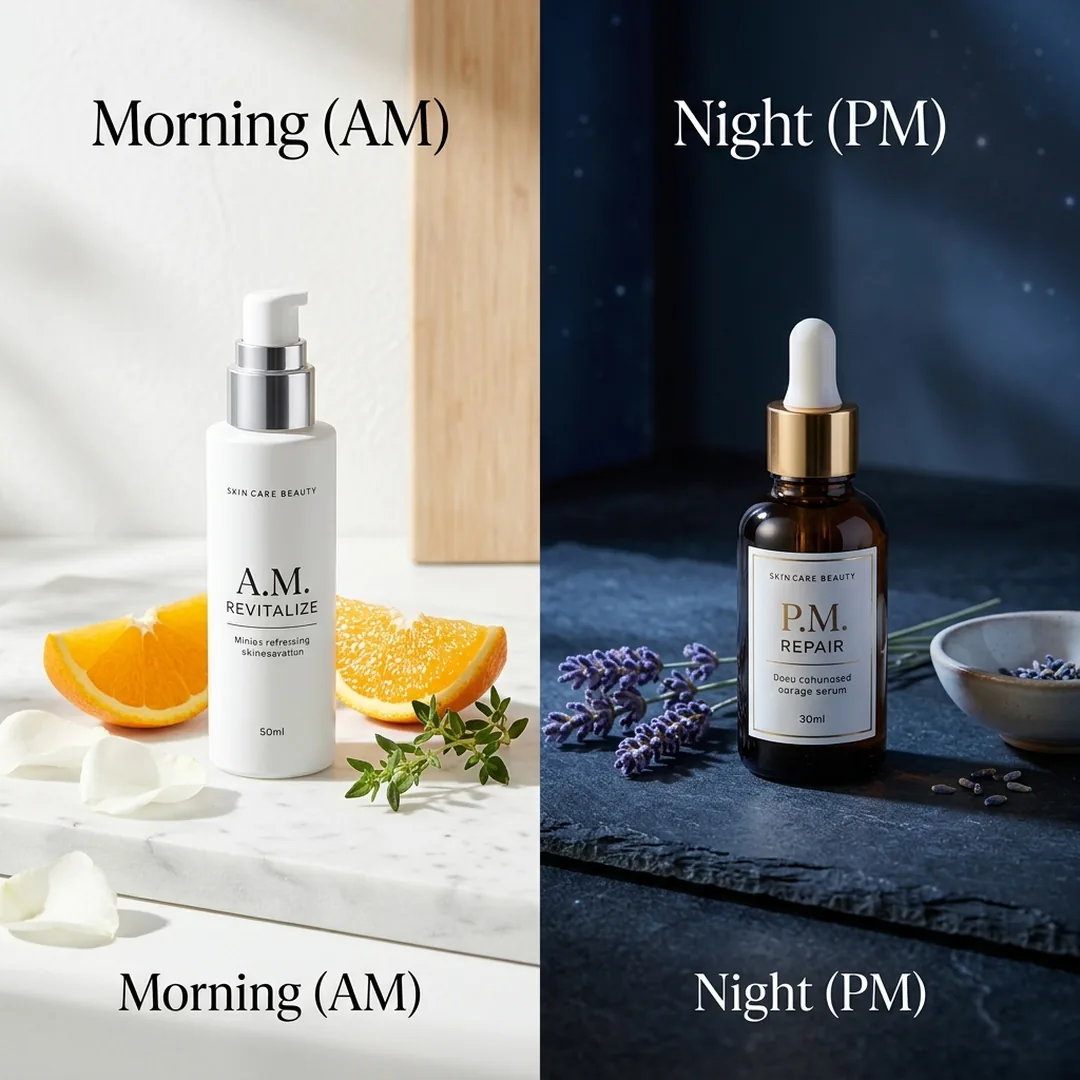
If you've ever wondered whether your morning vs night skincare routine actually needs to be different—the short answer is yes, and here's why it matters more than most people realize.
Your skin is not a passive organ. It operates on a 24-hour internal clock called a circadian rhythm, cycling between defense mode during the day and deep repair mode at night. The most effective morning vs night skincare routine works with those natural rhythms—not against them.
Whether you're building your very first skincare regimen or trying to level up an existing one, this guide breaks down every step, every ingredient, and every key difference between your AM and PM routines. Let's get into it.
Table of Contents
- Morning vs Night Skincare Routine: At a Glance
- Why Your Skin Needs Two Different Routines
- The Science of Skin's Circadian Rhythm
- The Complete Morning Skincare Routine (Step-by-Step)
- The Complete Night Skincare Routine (Step-by-Step)
- Key Ingredients: What Goes in the Morning vs Night
- Customizing Your Routine by Skin Type
- Common Skincare Routine Mistakes to Avoid
- How Long Should You Wait Between Skincare Steps?
- Building a Sustainable Skincare Routine: Tips for Beginners
- Key Takeaways
Morning vs Night Skincare Routine: At a Glance
Before diving into the details, here's a quick comparison table so you can see the big picture clearly:
| Aspect | Morning Routine | Night Routine |
|---|---|---|
| Goal | Protection & Defense | Repair & Renewal |
| Key Ingredients | Vitamin C, SPF, Antioxidants | Retinol, AHAs, Peptides |
| Cleanser | Gentle / Lightweight | Double Cleanse (oil + water) |
| Moisturizer | Lightweight / SPF-infused | Rich Night Cream |
| Sunscreen | Essential (final step) | Not needed |
| Exfoliation | Mild only 2-3x/week | AHAs/BHAs at night |
| Duration | 5-10 minutes | 10-20 minutes |
Why Your Skin Needs Two Different Routines
Think of your skin as having two very different jobs depending on the time of day. During daylight hours, it's in full-on defense mode—guarding against UV rays, pollution, blue light from screens, and environmental oxidative stress. At night, it flips the switch to repair mode: cell turnover accelerates, blood flow increases, and collagen production peaks.
This biological shift is the entire reason your morning and evening skincare routines should look—and work—differently. Using the same products morning and night isn't just inefficient; in some cases, it can actually cause harm.
For example, retinol applied in the morning breaks down in sunlight and becomes less effective (and potentially irritating). Vitamin C serums, on the other hand, are best used in the morning because they amplify sun protection and fight free radical damage in real time.
The Science of Skin's Circadian Rhythm
Your skin's internal clock regulates a surprisingly complex set of processes. Here's what's happening under the surface:
- Daytime: Sebum (oil) production is higher, forming a natural protective barrier. The skin focuses on defending against environmental aggressors.
- Nighttime: Cortisol levels drop, cell renewal speeds up by as much as 3x compared to daytime, and transepidermal water loss (TEWL) increases—meaning your skin loses more moisture while you sleep.
- Temperature: Skin temperature rises slightly during sleep, which makes it more receptive to rich, active ingredients.
PRO TIP
Because TEWL increases overnight, skipping your night moisturizer can leave skin dehydrated and dull by morning. A richer cream or sleeping mask locks in hydration and prevents that moisture loss.
The Complete Morning Skincare Routine (Step-by-Step)
Your morning skincare routine has one primary goal: protection. Every product you apply in the morning should either shield, hydrate, or prime your skin for the day ahead. Here's exactly how to layer it.
Step 1: Gentle Cleanser
Start with a mild, pH-balanced cleanser to remove any oils, sweat, or leftover nighttime products that have accumulated while you slept. This doesn't need to be a deep cleanse—you're not stripping the skin, just refreshing it.
Avoid foaming cleansers with sulfates in the morning if you have dry or sensitive skin. A gel or creamy formula works well for most skin types. Those with oily skin may benefit from a slightly deeper cleansing formula to control shine.
Step 2: Toner (Optional but Beneficial)
A toner helps rebalance your skin's pH after cleansing and preps it to absorb the next layers of product more effectively. Look for hydrating toners with niacinamide, rose water, or hyaluronic acid—not the astringent alcohol-heavy versions from decades past.
Step 3: Vitamin C Serum
This is the star of your morning routine. A vitamin C serum neutralizes free radicals caused by UV exposure and pollution, helps brighten skin tone, and supports collagen synthesis. Applied before sunscreen, it creates a powerful antioxidant shield.
Look for a stable form of vitamin C such as L-ascorbic acid (10–20%) or sodium ascorbyl phosphate if you have sensitive skin. Store it away from sunlight to preserve potency.
Step 4: Eye Cream
The skin around your eyes is delicate and thin. A morning eye cream with caffeine or peptides helps depuff, reduce dark circles, and keep fine lines from deepening over the day. Apply using your ring finger with a gentle tapping motion.
Step 5: Moisturizer
Even oily skin types need a morning moisturizer. Hydrated skin has a stronger barrier function, which means it's better at defending against the day's environmental stressors. Choose a lightweight, non-comedogenic formula. Those with dry skin may want something slightly richer.
Step 6: Sunscreen — Never Skip This
Sunscreen is non-negotiable. It is the single most important product in your morning skincare routine—bar none. UV exposure is the leading cause of premature aging, dark spots, uneven skin tone, and skin cancer. SPF 30 is the minimum; SPF 50 is preferred.
Apply sunscreen as the final step over your moisturizer. Reapply every two hours if you're spending time outdoors.
The Complete Night Skincare Routine (Step-by-Step)
Your nighttime skincare routine is where the real transformation happens. While you sleep, your skin is working hard to repair daily damage, rebuild its barrier, and renew itself. Your job is to give it the right tools.
Step 1: Makeup Remover / Micellar Water
If you wear makeup or sunscreen (which you should), start by breaking it down with a dedicated makeup remover or micellar water before cleansing. This ensures that your cleanser isn't fighting through layers of product to reach your skin.
Step 2: Oil-Based Cleanser (Double Cleansing)
This is one of the biggest differences between AM and PM routines. Double cleansing—starting with an oil-based cleanser followed by a water-based one—is the most effective way to remove the full day's accumulation of sunscreen, pollution, sebum, and makeup.
Oil cleansers work on the "like dissolves like" principle: they bind to oil-based impurities (sunscreen, excess sebum) and lift them away without stripping your skin's natural barrier.
Step 3: Water-Based Cleanser
Follow your oil cleanser with a gentle water-based cleanser to remove any remaining residue and water-soluble impurities. This two-step approach leaves skin truly clean and ready to absorb nighttime treatments.
Step 4: Exfoliant (2-3 Times Per Week)
Nighttime is ideal for chemical exfoliants like AHAs (glycolic acid, lactic acid) and BHAs (salicylic acid). These dissolve the bonds between dead skin cells, improving texture, brightness, and product absorption.
Don't exfoliate every night—2-3 times per week is enough for most skin types. Over-exfoliating disrupts your skin's barrier and causes irritation.
Step 5: Toner / Essence
Similar to the morning, a hydrating toner or essence at night helps prep the skin for active ingredients and boosts overall hydration. Reach for formulas with hyaluronic acid, fermented ingredients, or centella asiatica on nights when you haven't exfoliated.
Step 6: Treatment Serum / Retinol
This is where nighttime routines diverge most significantly from morning routines. Powerful actives like retinol, retinoids, peptide serums, and brightening agents (niacinamide, kojic acid) are best used at night for two reasons:
- Many actives (especially retinol and AHAs) are photosensitive—sun exposure breaks them down and can cause irritation.
- Your skin's enhanced overnight absorption means these ingredients penetrate more effectively while you sleep.
Start retinol slowly—2-3 nights per week—and work up gradually. Always use a broad-spectrum SPF the following morning when using retinoids.
Step 7: Eye Cream (PM Formula)
A richer, more intensive eye cream at night can target fine lines, crow's feet, and dark circles more aggressively than a lightweight morning formula. Look for peptides, retinol alternatives (like bakuchiol), and ceramides.
Step 8: Night Cream or Sleeping Mask
Finish with a rich night cream or sleeping mask to seal in all your treatments and prevent moisture loss overnight. Night creams are typically thicker and more occlusive than daytime moisturizers, containing ingredients like ceramides, shea butter, and squalane.
On nights when you've used retinol or acids, opt for a very nourishing, calming formula to counterbalance potential irritation.
Key Ingredients: What Goes in the Morning vs Night
One of the most common skincare mistakes is using the wrong ingredients at the wrong time. Here's a simple breakdown:
Best Ingredients for Your Morning Routine
- Vitamin C (L-ascorbic acid): Antioxidant protection, boosts SPF effectiveness
- Niacinamide: Pore-minimizing, brightening, anti-inflammatory
- Hyaluronic Acid: Deep hydration, plumps skin before makeup
- Peptides: Supports collagen; stable in sunlight
- SPF 30-50: Non-negotiable UV protection
- Caffeine (eye area): Depuffs and stimulates circulation
Best Ingredients for Your Night Routine
- Retinol / Retinoids: Speeds cell turnover, reduces fine lines and hyperpigmentation
- AHAs (Glycolic, Lactic Acid): Exfoliates and resurfaces skin texture
- BHAs (Salicylic Acid): Unclogs pores, ideal for acne-prone skin
- Peptides: Accelerates overnight repair
- Ceramides: Rebuilds and strengthens the moisture barrier
- Bakuchiol: Natural retinol alternative, great for sensitive skin
INGREDIENT CONFLICT WARNING
Never layer Vitamin C with Retinol in the same routine—they work best in separate sessions. Vitamin C goes in the morning, Retinol at night. Similarly, AHAs/BHAs should not be layered with retinoids in the same routine.
Customizing Your Routine by Skin Type
Not every skin type needs the exact same steps. Here's how to tailor your morning vs night skincare routine to what your skin actually needs:
For Oily Skin
Morning: Use a foaming cleanser and a lightweight, oil-free moisturizer. Choose a mattifying mineral SPF. Niacinamide serums help regulate oil production.
Night: Double cleanse diligently. BHA (salicylic acid) 2-3x per week keeps pores clear. Skip heavy creams and opt for a gel-based night moisturizer.
For Dry Skin
Morning: Layer hydrating products generously—a hyaluronic acid serum under a rich SPF moisturizer. Avoid foaming cleansers that strip natural oils.
Night: This is your time to load up. Facial oil under your night cream adds extra nourishment. A sleeping mask once a week makes a noticeable difference.
For Sensitive Skin
Morning: Keep it minimal—gentle cleanser, a calming serum (centella asiatica or aloe), mineral SPF. Fragrance-free everything.
Night: Introduce actives extremely slowly. Try bakuchiol instead of retinol. Use only one new product at a time.
For Combination Skin
Morning: A balancing toner with niacinamide after cleansing helps manage the T-zone without over-drying drier areas.
Night: Multi-masking (different products on different zones) can be very effective. Salicylic acid on the T-zone, hydrating serum on cheeks.
Common Skincare Routine Mistakes to Avoid
Even people with good intentions make mistakes that undermine their results. Here are the most common ones:
- Skipping sunscreen in the morning: This single habit wipes out the benefits of most other skincare products over time.
- Using retinol in the morning: It breaks down in UV light and can cause serious photosensitivity.
- Over-cleansing: Washing your face more than twice a day strips the protective oil barrier, leading to dryness and irritation.
- Skipping night cleansing: Sleeping with sunscreen, makeup, and pollution residue on your skin leads to clogged pores and dullness.
- Using too many actives at once: Combining multiple strong ingredients (retinol + AHA + BHA on the same night) causes more harm than good.
- Not waiting between layers: Give each product 30-60 seconds to absorb before applying the next one.
How Long Should You Wait Between Skincare Steps?
A question that comes up constantly: do you need to wait between products? The short answer is yes, especially with actives.
As a general rule, wait 30 seconds to 1 minute between lightweight products (toner → serum) and up to 2-3 minutes after applying retinol before layering your moisturizer over it. This buffer period reduces irritation (known as the "retinol sandwich" method) and allows better absorption.
For vitamin C, let it fully absorb before applying SPF—about 1 minute is usually enough. The key is to feel each product go from wet to slightly tacky before adding the next layer.
Building a Sustainable Skincare Routine: Tips for Beginners
If you're just starting out, the idea of a 7-step morning and 8-step night routine can feel overwhelming. You don't have to do everything at once. Here's how to build a sustainable habit:
- Start with the basics: Cleanser, moisturizer, and SPF in the morning. Cleanser and moisturizer at night. That's a solid foundation.
- Add one product at a time: Introduce new actives one at a time, spaced at least 2 weeks apart, so you can identify any reactions.
- Consistency over complexity: A simple routine done consistently every day beats an elaborate one done occasionally.
- Track your skin's response: Keep a brief note of how your skin feels after new products. This helps you understand what's working.
- See a dermatologist: For persistent acne, rosacea, or specific skin concerns, professional guidance beats guesswork every time.
Understanding the difference between your morning vs night skincare routine is one of the highest-leverage changes you can make for your skin's health and appearance. It's not about spending more money or adding more steps—it's about using the right products at the right time.
Morning protects. Night repairs. When you align your skincare routine with your skin's natural circadian rhythm, everything works harder and smarter. The results—clearer texture, brighter tone, fewer fine lines, and a genuinely healthier complexion—build up over weeks and months of consistent practice.
Start simple, stay consistent, and let the science do the work.
Frequently Asked Questions (FAQ)
Q1: Can I use the same moisturizer in the morning and at night?
You can, but it's not ideal. Morning moisturizers are typically lighter and often contain SPF, while night creams are richer and more occlusive to support overnight repair. If you only have one moisturizer, it's perfectly fine to use it twice daily—just make sure you apply a separate SPF on top in the morning.
Q2: Do I really need to cleanse in the morning if I cleansed the night before?
Yes—a light morning cleanse is still important. While you sleep, your skin produces oil and sweats, and your nighttime products can build up on the surface. A gentle morning cleanse clears this away, creating a clean base that helps your daytime products (especially vitamin C and SPF) absorb and perform better.
Q3: When should I apply retinol—morning or night?
Always at night. Retinol is photosensitive, meaning UV exposure degrades it and significantly reduces its effectiveness. It can also increase your skin's sensitivity to sunlight, raising the risk of irritation and sun damage. Apply it as part of your nighttime routine and always wear SPF 30+ the next morning.
Q4: How long before I see results from a new skincare routine?
Most people see initial hydration and texture improvements within 2-4 weeks. More significant changes—reduction in fine lines, fading hyperpigmentation, and improved skin tone—typically take 8-12 weeks of consistent use. Actives like retinol can take up to 3-6 months for full visible benefits. Patience and consistency are everything in skincare.

Elina is a TrendRouge fashion and lifestyle writer focused on timeless style, beauty routines, accessories, and everyday elegance. Her guides combine practical styling advice with polished editorial insight for modern readers.