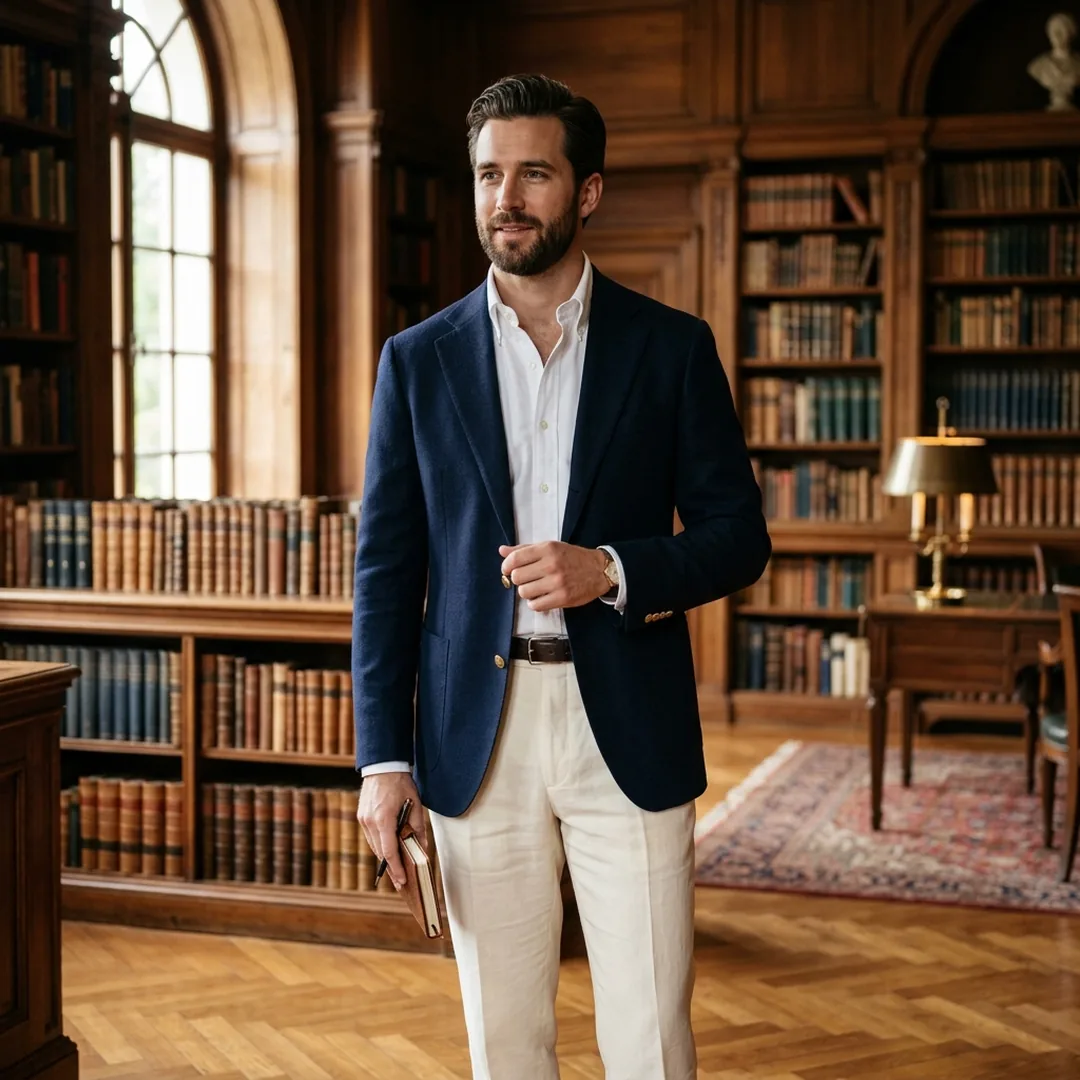
You've seen it on social media - the immaculate blazers, the quiet confidence, the effortless polish that no logo can replicate. The old money fashion guide for men isn't about showing off wealth; it's about embodying a lifestyle that values quality, tradition, and restraint above all else.
Old money style has been trending for a reason. In a world saturated with fast fashion and loud branding, men are turning to a cleaner, more refined aesthetic - one rooted in heritage and built to last decades. Whether you're starting from scratch or refining an existing wardrobe, this guide covers everything you need: the core philosophy, essential pieces, color palettes, shoes, grooming, and seasonal outfit ideas.
Let's break it all down.
Table of Contents
- What Is the Old Money Aesthetic? Understanding the Philosophy
- The Old Money Color Palette for Men
- Old Money Fashion Guide for Men: The Essential Wardrobe Pieces
- Old Money Shoes for Men: The Right Footwear
- Old Money Accessories: Quiet Luxury in the Details
- Building a Capsule Old Money Wardrobe by Season
- Old Money Grooming: The Finishing Touch
- Old Money Style Mistakes to Avoid
- Where to Shop for Old Money Fashion: Brands to Know
- Key Takeaways
What Is the Old Money Aesthetic? Understanding the Philosophy
Before you buy a single item, you need to understand the mindset behind old money style.
Old money fashion is the aesthetic associated with generational wealth - think New England prep schools, Ivy League campuses, East Hamptons summers, and European country estates. It's not about being rich; it's about looking like you've never had to think about being rich.
The core principles are simple but non-negotiable:
- Quality over quantity. Every piece should be well-made, built from natural fabrics, and designed to last.
- Understatement over ostentation. No flashy logos. No oversized gold chains. The clothes speak through cut, fabric, and fit - not branding.
- Timelessness over trend. Old money men don't follow seasonal drops. They invest in classics that transcend fashion cycles.
- Fit above everything. Even an inexpensive shirt looks expensive when it fits perfectly. Old money style lives and dies by the tailored silhouette.
This aesthetic is a quiet rebellion against fast fashion - a philosophy that says substance outlasts hype.
The Old Money Color Palette for Men
One of the easiest ways to nail old money style is to master the color palette. It's intentionally muted, natural, and cohesive.
Core Neutrals
These are your wardrobe foundation colors. Mix and match freely:
- Navy - the anchor of every old money wardrobe. Works for blazers, trousers, sweaters, and suits.
- Camel / Tan - especially powerful in outerwear. Warm, rich, and inherently classic.
- Charcoal grey - a sophisticated alternative to black. More versatile, more refined.
- Cream / Ivory - for shirts, knitwear, and summer trousers.
- Stone / Beige - neutral without being bland. Perfect for chinos and lightweight jackets.
Seasonal Accent Colors
Layer in seasonal accents to keep things interesting without breaking the aesthetic:
- Powder blue - ideal for spring and summer shirts.
- Burgundy - a fall staple in knitwear, ties, and pocket squares.
- Forest green - adds warmth in autumn without veering into garish territory.
- Soft white - crisp and clean for summer linen looks.
What you won't find in the old money palette: neon, aggressive prints, or high-contrast patterns. If it draws attention to itself, it doesn't belong here.
Old Money Fashion Guide for Men: The Essential Wardrobe Pieces
This is the heart of the guide. Let's build your wardrobe from the ground up.
Suits and Blazers
A well-fitted suit is the cornerstone of old money style. Go for classic cuts - not ultra-slim, not boxy, but structured and flattering.
What to look for:
- Fabrics: wool flannel for fall/winter, lightweight wool or linen for spring/summer.
- Colors: charcoal, navy, mid-grey.
- Fit: the shoulder seam should sit exactly at your shoulder. The jacket should button without pulling.
- Lapels: notch or peak - never too wide, never too narrow.
A navy blazer deserves special mention. It's possibly the single most useful piece in the old money wardrobe. Wear it with cream chinos and a white Oxford for a classic daytime look, or over grey flannels for an elevated evening ensemble.
Bespoke vs. off-the-rack: Ideally, invest in bespoke or made-to-measure tailoring. If that's outside your budget, buy off-the-rack and take it to a tailor for alterations. The fit is what matters.
Dress Shirts and Oxford Shirts
The old money shirt wardrobe is clean and deliberately simple:
- White poplin or broadcloth - the most versatile piece you'll ever own.
- Light blue Oxford cloth button-down (OCBD) - a preppy staple with the right amount of casualness.
- Pale pink or sky blue - adds subtle variety without disrupting the palette.
- Subtle checks or thin stripes - acceptable as long as they're understated.
Tuck them in. Keep the collar crisp. The OCBD can be worn casually with an open collar under a blazer - it bridges formal and relaxed beautifully.
Knitwear: Cashmere, Merino, and Cable Knit
Sweaters are where old money style truly shines. The right knitwear adds texture and warmth without sacrificing elegance.
Must-have knit pieces:
- Cashmere crewneck - in navy, camel, or charcoal. Layer over a white Oxford for the quintessential old money look.
- Merino wool V-neck - ideal under a blazer as an alternative to a tie.
- Cable-knit sweater - slightly more casual, but still refined. Works perfectly for country weekends.
- Turtleneck / rollneck - a powerful move for winter. Charcoal or cream under a blazer reads as effortlessly sophisticated.
Avoid acrylic blends. Wool and cashmere age beautifully; synthetics pill and look cheap within months.
Trousers and Chinos
The bottom half matters as much as the top. Old money trouser silhouettes are always tailored - never baggy, never overly slim.
Essential trousers:
- Grey flannel trousers - a wardrobe cornerstone. Pair with virtually anything.
- Cream or stone chinos - the backbone of the smart-casual old money look.
- Cavalry twill or corduroy - great for autumn and weekend country dressing.
- Wool dress trousers - in navy or charcoal for formal occasions.
The break at the trouser hem should be slight - a half-break or no-break. Clean lines, always.
Outerwear: Coats That Command Respect
Your coat is often the first thing people see. Make it count.
- Camel overcoat - the single most powerful piece of old money outerwear. Floor-length or knee-length, structured, in a soft camel wool. Instantly transforms any outfit beneath it.
- Navy peacoat - military heritage, clean silhouette, timeless. Perfect for city wear.
- Duffle coat - the toggle-front classic. Made from heavy wool, it's both distinctive and practical.
- Barbour waxed jacket - for countryside aesthetics. Green or navy, worn lightly waxed and slightly worn-in.
Quality here is non-negotiable. A cheap coat ruins the entire look. Invest once, wear for decades.
Old Money Shoes for Men: The Right Footwear
Your shoes can make or break an old money outfit. The rule is simple: natural leathers, classic silhouettes, zero flashiness.
The Hierarchy of Old Money Footwear
- Penny loafers - the undisputed king of old money footwear. Burgundy or tan, in full-grain calfskin or suede. Wear them with or without socks; sockless in summer is perfectly acceptable.
- Oxford shoes - for formal occasions. A clean cap-toe or plain-toe Oxford in black or dark brown is all you need.
- Derby shoes - slightly less formal than the Oxford but still clean and refined. Brown leather works exceptionally well.
- Chelsea boots - for cooler months. Tan or dark brown suede. Understated and versatile.
- Suede brogues - the brogue detail adds character without being loud. Work beautifully for smart-casual and countryside looks.
- Boat shoes / deck shoes - the summer essential. Classic Sperry or similar canvas/leather options. Worn sockless with chinos or linen trousers.
What to avoid: white sneakers as a fashion statement, overly chunky soles, athleisure footwear with tailored pieces, and heavily branded shoes.
Old Money Accessories: Quiet Luxury in the Details
Accessories are where old money men exercise the most restraint - and paradoxically, the most taste.
The Watch
The centerpiece of old money accessory dressing. It should be understated, mechanical, and classic. Think Rolex Datejust, Omega Seamaster, or Cartier Tank - slim case, leather strap or simple steel bracelet. The watch tells time and tells you something about the man wearing it.
Avoid oversized watches, digital displays, and anything with excessive complication just for show.
The Belt
Match your belt leather to your shoes. Full-grain calfskin, brass buckle only. Simple, clean, and always proportional to the trouser loops.
Pocket Square
A white linen pocket square in the breast pocket is old money shorthand for "I know what I'm doing." Fold it simply - a flat or one-point fold. Avoid the overly puffed TV fold.
Ties and Scarves
For formal occasions: silk ties in repp stripes, solid navy or burgundy, or subtle paisley. Wool ties in autumn add texture and warmth.
For casual: a lightweight cashmere scarf in winter, or a silk pocket square that ties loosely at the neck for summer linen looks.
Sunglasses
Tortoiseshell or dark acetate frames. Classic silhouettes - round, oval, or a clean rectangular shape. Brands like Oliver Peoples, Persol, or vintage-inspired frames suit the aesthetic perfectly.
Building a Capsule Old Money Wardrobe by Season
The beauty of old money fashion is its seasonless versatility. Here's how to dress through the year.
Spring
- Navy blazer + white Oxford + cream chinos + tan suede loafers.
- Light blue linen shirt + stone chinos + boat shoes.
- Grey merino crewneck + white OCBD + dark chinos.
Summer
- White linen shirt + olive chinos + canvas espadrilles.
- Pale blue polo + cream linen trousers + penny loafers, sockless.
- Lightweight seersucker or linen suit in navy or tan for events.
Autumn
- Camel overcoat + burgundy knit tie + grey flannels + calf leather loafers.
- Barbour jacket + OCBD + corduroy trousers + suede chukka boots.
- Cable-knit sweater + dark jeans + Chelsea boots.
Winter
- Charcoal flannel suit + cashmere rollneck + black Oxford shoes.
- Navy peacoat + cashmere crewneck + grey flannels + brogues.
- Camel overcoat + white shirt + navy tie + charcoal trousers.
Each seasonal capsule works with minimal pieces. That's the point - disciplined choices, maximum elegance.
Old Money Grooming: The Finishing Touch
Clothes alone don't make the old money man. Your grooming has to match the wardrobe.
Hair
Classic, clean, and well-maintained. The side part is the quintessential old money hairstyle - neat, polished, and timeless. Alternatively, a natural, slightly textured cut worn neatly is equally appropriate. What doesn't work: anything overly trendy, bleached, or unkempt.
Facial Hair
If you opt for facial hair, keep it well-groomed. A light stubble maintained at a consistent length, or a neatly trimmed short beard. Clean-shaven always reads as the most polished choice in formal settings.
Fragrance
Light and refined. Woody, leathery, or fresh marine notes suit the aesthetic well. Classics like Eau Sauvage by Dior, Polo Ralph Lauren, or Bleu de Chanel hit the right notes. The fragrance should be noticed when you lean in - not when you walk into a room.
Skincare
Basic but consistent. A clean, moisturized complexion that looks naturally healthy - not heavily product-laden. Old money grooming is about maintenance, not performance.
Old Money Style Mistakes to Avoid
Even with the right pieces, certain habits will undermine the entire aesthetic:
- Wearing visible logos - the fastest way to signal new money. Keep branding minimal and subtle.
- Cheap synthetic fabrics - acrylic, polyester blends, or fast fashion materials betray the aesthetic immediately.
- Poor fit - even expensive clothes look cheap when they don't fit properly.
- Over-accessorizing - heavy gold chains, oversized watches, and stacking rings kill the understatement principle.
- Neon or high-contrast colors - if it attracts attention from across the room, it's wrong.
- Mixing too many casual pieces - blending streetwear into old money looks requires a light touch. One casual item max.
- Neglecting grooming - messy hair, unkempt nails, or worn shoes ruin even the most carefully chosen outfit.
Where to Shop for Old Money Fashion: Brands to Know
You don't need to spend a fortune to dress with old money sensibility. What you need is to shop smart.
Heritage investment brands worth saving for:
- Ralph Lauren - Purple Label for the best; Polo for everyday.
- Brooks Brothers.
- J.Press.
- Burberry.
- Barbour.
Mid-range quality options:
- Banana Republic for basics.
- Charles Tyrwhitt for shirts and suits.
- Reiss.
Thrift and vintage: Some of the best old money pieces live in estate sales and vintage shops. A well-kept Harris Tweed blazer or a cashmere overcoat from a thrift store can outperform a new fast-fashion equivalent every time.
The rule: prioritize natural fabrics, classic cuts, and condition - regardless of where the piece came from.
The old money fashion guide for men ultimately comes down to one idea: invest in what lasts, ignore what doesn't.
In a world where trends cycle faster than ever, there's something deeply satisfying - and practical - about building a wardrobe that never goes out of style. A camel overcoat purchased today will look just as good in 2035. A well-fitted navy suit has been the right choice for a hundred years and will be for a hundred more.
Old money style isn't about pretending to be something you're not. It's about making choices that reflect a genuine appreciation for quality, craft, and timeless elegance. It's about dressing like a man who doesn't need to prove anything - because the clothes quietly do it for him.
Start with the foundations: one great blazer, a handful of well-fitted shirts, quality knitwear, and a pair of leather loafers. Build from there. The rest will follow naturally.
Frequently Asked Questions (FAQ)
Q1: What is the old money fashion aesthetic for men?
The old money fashion aesthetic for men is a style rooted in understated elegance, quality natural fabrics, and timeless classic silhouettes. It favors neutral color palettes - navy, camel, charcoal, cream - and classic pieces like blazers, Oxford shirts, cashmere sweaters, tailored trousers, and leather loafers. The philosophy prioritizes quality over quantity and avoids flashy branding or trend-driven pieces.
Q2: What are the key clothing items in an old money wardrobe for men?
The essential pieces include: a navy or camel blazer, a white Oxford cloth button-down shirt, a cashmere crewneck sweater, grey flannel or cream chino trousers, a camel wool overcoat, leather penny loafers or Oxford shoes, and a slim-profile dress watch. Together, these pieces form a versatile, seasonless wardrobe built on classical foundations.
Q3: How is old money style different from new money style?
Old money style emphasizes restraint, natural fabrics, and minimal branding - the goal is to look polished without drawing attention. New money style tends toward visible luxury logos, flashy accessories, and trend-driven pieces designed to signal wealth overtly. Old money dressing "whispers" wealth through quality and fit; new money "shouts" it through branding and excess.
Q4: Can you achieve old money style on a budget?
Absolutely. The key principles - quality fabrics, proper fit, neutral colors, and classic cuts - can be followed at virtually any budget. Shop thrift stores and vintage shops for heritage pieces like wool blazers, cashmere sweaters, and leather shoes at a fraction of retail prices. Focus your budget on tailoring so that even affordable pieces fit perfectly. Avoid synthetic fabrics and fast fashion regardless of budget.

Elina is a TrendRouge fashion and lifestyle writer focused on timeless style, beauty routines, accessories, and everyday elegance. Her guides combine practical styling advice with polished editorial insight for modern readers.