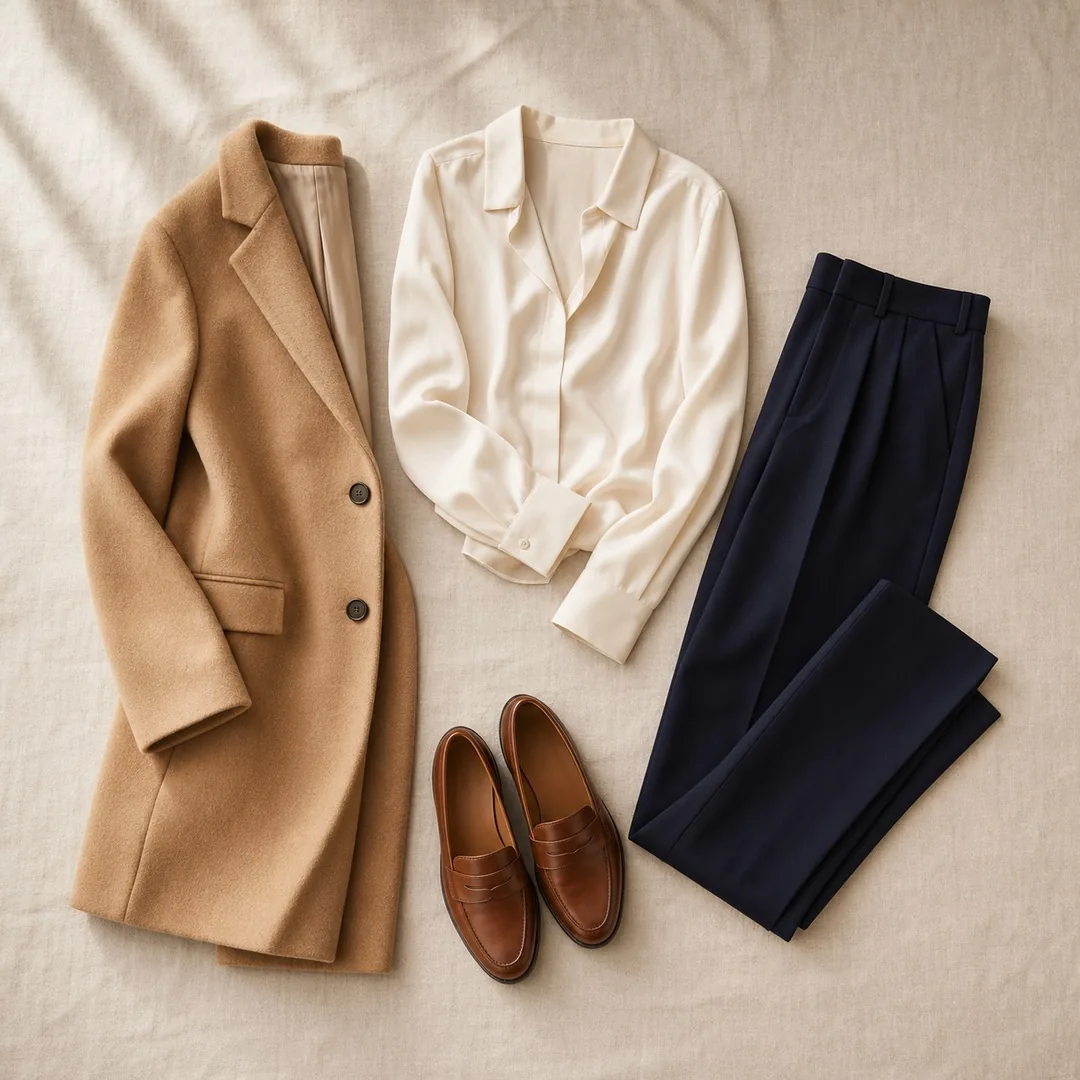
Quiet luxury is a style philosophy built on understated, high-quality clothing that signals wealth through craftsmanship rather than logos. Instead of flashy branding, it relies on natural fabrics, tailored fit, neutral colors, and pieces designed to last for years, not seasons.
If you've seen the term everywhere but aren't sure what actually separates "quiet luxury" from just... wearing plain clothes, this guide breaks it down from the ground up. No fashion-school jargon, no assumption that you already own a cashmere sweater — just a clear, practical explanation of what the trend is, where it came from, how to try it on any budget, and whether it's actually still relevant heading into 2026.
- Quiet luxury means investing in fewer, better-made items instead of many cheap or logo-heavy ones.
- The look favors neutral colors, natural fabrics (wool, cashmere, silk, cotton, linen), and clean tailoring over prints or branding.
- It gained mainstream attention around 2022–2023, partly through shows likeSuccession, and became one of the defining style movements of 2024–2025.
- Heading into 2026, fashion forecasters are split: some report a swing toward "loud luxury" and maximalism on the runways, while others argue quiet luxury is settling in as a permanent wardrobe philosophy rather than a passing trend.
- You don't need a designer budget to dress quiet luxury — the principles (fit, fabric, restraint, longevity) matter more than the price tag.
Table of Contents
What Is Quiet Luxury? (Direct Answer)
Quiet luxury is a fashion and lifestyle approach that prioritizes understated quality over visible status symbols. It shows wealth and taste through the quality of a garment — the weight of the fabric, the precision of the stitching, the fit — rather than through a visible designer logo or trend-driven design.
Think of it as the opposite of a T-shirt with a giant brand name across the chest. A quiet luxury version of that same T-shirt would be plain, in a neutral color, made from heavyweight cotton that drapes well and holds its shape after dozens of washes. Nobody would know it cost more unless they touched the fabric or noticed how well it fit.
The term is sometimes used interchangeably with "stealth wealth," "old money style," or "understated elegance," though each has slightly different roots (more on that below).
Quiet Luxury at a Glance
| Element | Quiet Luxury Approach | Typical "Loud" Approach |
|---|---|---|
| Branding | Hidden or absent | Large, visible logos |
| Color palette | Neutrals: beige, cream, navy, camel, black, grey | Bright colors, bold prints |
| Fabric | Natural fibers: cashmere, wool, silk, linen, cotton | Synthetic blends, novelty fabrics |
| Fit | Tailored, precise | Trend-driven, often looser or exaggerated |
| Shopping frequency | Infrequent, considered purchases | Frequent, trend-cycle purchases |
| Cost signal | Communicated through craftsmanship | Communicated through branding |
| Lifespan of pieces | Years to decades | One to a few seasons |
Where Did the Quiet Luxury Trend Come From?
Understated dressing among the genuinely wealthy isn't new — it echoes older ideas like "old money style" and Italian sprezzatura (effortless elegance), both of which have existed for generations. What's new is the label and the internet-driven speed at which it spread.
Quiet luxury became a mainstream search term and social media trend around 2022–2023. A few forces pushed it into the spotlight:
- The HBO series Succession dressed its ultra-wealthy characters in unbranded, expensive-looking basics, and the show's costume choices were widely covered by fashion press and copied online.
- Logo fatigue. After years of maximalist, logo-heavy "loud" luxury from the 2010s, both consumers and design houses shifted focus back toward subtlety and craftsmanship.
- Economic uncertainty. During periods of inflation or recession fears, overt displays of spending can feel tone-deaf, making understated dressing more socially comfortable for people who can afford quality.
- Social media discovery. TikTok and Pinterest turned "quiet luxury" into a searchable aesthetic, complete with outfit formulas, capsule wardrobe guides, and shopping lists — accelerating a decades-old style philosophy into a viral trend.
By 2024 and 2025, quiet luxury had moved from a niche style term into mainstream retail marketing, showing up in everything from clothing to interior design and furniture.
Is Quiet Luxury Still Relevant in 2026?
This is one of the most-searched follow-up questions, and the honest answer is: it depends who you ask.
Some fashion forecasters and runway reports for 2026 are calling for a pendulum swing toward "loud luxury" — bolder colors, statement jewelry, feathers, and 80s-inspired glamour, positioning quiet luxury as the trend that peaked in 2024–2025 and is now fading from the runways.
Other voices in the industry push back on that framing. Their argument: quiet luxury was never really a seasonal "trend" that could go out of style ? it's closer to a long-term values shift toward buying fewer, better things, driven by fast-fashion fatigue and a desire for authenticity over performative spending. Under that view, the aesthetic (all-beige everything) might cool off, but the underlying behavior ? investing in quality basics that last ? keeps growing.
Practical takeaway: if your goal is to chase whatever's newest on the runway, quiet luxury's peak visibility moment has likely passed. If your goal is a wardrobe that looks good and holds up for years, the core principles of quiet luxury remain sound regardless of what's trending on Pinterest this season.
The Core Principles of Quiet Luxury
If you strip away the marketing, quiet luxury really comes down to five repeatable rules.
1. Prioritize Fabric Over Branding
The single biggest giveaway of quiet luxury is fabric quality. Natural fibers age better, feel better, and photograph better than synthetics.
Fabrics to look for:
- Cashmere and merino wool (sweaters, coats)
- Silk and silk-blends (blouses, scarves)
- Fine cotton (shirts, T-shirts)
- Linen (warm-weather pieces)
- Leather and suede (bags, shoes, jackets)
Fabrics to minimize:
- Polyester-heavy blends
- Acrylic knitwear
- Stiff, non-breathable synthetics
2. Choose a Neutral, Cohesive Color Palette
Quiet luxury wardrobes lean heavily on a tight color range — beige, camel, cream, navy, charcoal, black, and white — so that almost every piece can be mixed and matched. This isn't about being boring; it's about building a wardrobe where nothing clashes and everything works together, reducing decision fatigue and maximizing outfit combinations from a smaller closet.
3. Fit Is Non-Negotiable
An expensive shirt in the wrong size looks worse than a cheap shirt that's tailored perfectly. Quiet luxury treats tailoring as part of the cost of the garment, not an optional extra. A $40 blazer taken to a tailor can outperform a $400 blazer bought straight off the rack.
4. Buy Less, Buy Better (The Capsule Wardrobe Mindset)
Rather than buying ten trendy pieces a season, quiet luxury encourages building a smaller capsule wardrobe of high-quality staples that get worn on repeat for years. The goal is cost-per-wear: a $300 coat worn 200 times costs $1.50 per wear, while a $50 coat worn 10 times before falling apart costs $5 per wear.
5. Let Craftsmanship Do the Talking
Details like clean stitching, natural buttons (horn, shell, or metal instead of plastic), well-finished seams, and structured tailoring are what separate quiet luxury from simply "wearing basics." These details are often invisible from across a room but obvious up close — which is the entire point of the aesthetic.
How to Get the Quiet Luxury Look on a Budget
You don't need designer prices to apply quiet luxury principles. Here's a beginner-friendly, step-by-step approach.
Step 1: Audit Your Closet
Before buying anything, sort your current wardrobe into three piles:
- Keep: neutral, well-fitting, good-fabric pieces
- Alter: decent pieces that need tailoring
- Replace: logo-heavy, poor-fit, or low-quality items you rarely wear
Step 2: Build Around a Base Palette
Pick 3–4 neutral colors (for example: navy, cream, camel, black) and commit to buying only within that palette for a season. This instantly makes a smaller wardrobe feel more expensive because everything coordinates.
Step 3: Prioritize These Five Pieces First
- A well-fitted blazer in a neutral color
- A quality wool or cashmere-blend coat
- Structured trousers or tailored denim
- A crisp cotton or silk button-down shirt
- Leather shoes or boots in a versatile neutral tone
Step 4: Shop Secondhand and Sample Sales
Quality fabrics hold up well, which makes secondhand and resale platforms genuinely good sources for quiet luxury pieces at a fraction of retail price. Consignment stores, resale apps, and outlet sample sales are all worth checking before paying full price anywhere.
Step 5: Use a Tailor
A local tailor is arguably the single best "quiet luxury" investment available at any budget. Hemming trousers, taking in a waist, or adjusting sleeve length can transform an inexpensive piece into something that reads as expensive.
Common Mistakes Beginners Make
- Buying only beige and calling it done. Quiet luxury is about quality and fit first — color is secondary. An ill-fitting beige sweater in cheap acrylic is not quiet luxury.
- Overspending on logos "in disguise." Some brands now put subtle, small-scale logos on pieces and market them as quiet luxury. Read the fabric content label, not just the price tag.
- Ignoring fit to save money. Skipping tailoring undermines the entire look.
- Treating it as a costume instead of a system. Quiet luxury works best as a long-term wardrobe strategy, not a one-time shopping haul.
Quiet Luxury vs. Similar Style Terms
Beginners often confuse quiet luxury with related terms. Here's how they differ.
| Term | Core Idea | How It Differs From Quiet Luxury |
|---|---|---|
| Old Money Style | Dressing like multi-generational wealth: prep-school inspired, equestrian and country-club references | Often more specific (blazers, crests, tennis skirts) vs. quiet luxury's broader minimalism |
| Stealth Wealth | Deliberately hiding wealth through plain dressing | Nearly synonymous with quiet luxury; "stealth wealth" emphasizes the intent to conceal, quiet luxury emphasizes the aesthetic |
| Minimalism | Owning fewer things overall, not fashion-specific | Minimalism is about quantity; quiet luxury is about quality plus quantity |
| Capsule Wardrobe | A small, versatile set of mix-and-match clothing | A methodology quiet luxury often uses, not a style itself |
| Normcore | Deliberately ordinary, mass-market basics (2010s trend) | Normcore embraces cheap basics ironically; quiet luxury insists on high-quality materials |
Final Thoughts
Quiet luxury isn't really about beige sweaters or avoiding logos for their own sake — it's a wardrobe philosophy built on buying fewer, better things and letting fit and fabric do the talking instead of a brand name. Whether the aesthetic itself stays trendy through 2026 or gets overtaken by louder, more maximalist runway looks, the underlying habits — investing in quality, prioritizing fit, and shopping intentionally — are worth keeping regardless of what's currently in fashion.
Frequently Asked Questions (FAQ)
Q1: What does "quiet luxury" mean in simple terms?
It means dressing in high-quality, well-fitted, understated clothing that communicates taste and money through craftsmanship rather than visible logos or branding.
Q2: Do I need to spend a lot of money to dress quiet luxury?
No. The core principles — neutral colors, good fit, natural fabrics, and buying fewer, better pieces — can be applied at almost any budget by shopping secondhand, using a tailor, and being selective rather than buying frequently.
Q3: Is quiet luxury the same as "old money" style?
They overlap but aren't identical. Old money style often references specific prep, equestrian, or country-club aesthetics, while quiet luxury is a broader minimalist approach to high-quality, unbranded dressing.
Q4: Why did quiet luxury become so popular?
It gained traction around 2022–2023, boosted by shows like Succession , growing fatigue with logo-heavy "loud" luxury from the previous decade, and a broader shift toward valuing craftsmanship and longevity over trend-chasing.
Q5: Is quiet luxury going out of style in 2026?
Fashion forecasters are divided. Some 2026 runway reports point toward a return of bolder, "loud luxury" glamour, while others argue the underlying values behind quiet luxury — quality over quantity, longevity over trend-chasing — are becoming a permanent shift rather than a passing aesthetic.
Q6: What colors are associated with quiet luxury?
Neutral, muted tones: beige, cream, camel, navy, charcoal, grey, black, and white. The palette is intentionally narrow so pieces mix and match easily.
Q7: Can men dress in quiet luxury style too?
Yes. For men, quiet luxury typically means well-tailored trousers, quality knitwear, minimal-branding outerwear, leather goods without visible logos, and classic footwear in neutral tones.
Q8: What's the difference between quiet luxury and just wearing plain clothes?
The difference is quality and fit. Plain clothing in cheap synthetic fabric with a poor fit is not quiet luxury. The trend specifically requires natural fabrics, precise tailoring, and attention to construction details — the "plainness" is intentional and expensive-looking up close, not accidental.

Elina is a TrendRouge fashion and lifestyle writer focused on timeless style, beauty routines, accessories, and everyday elegance. Her guides combine practical styling advice with polished editorial insight for modern readers.